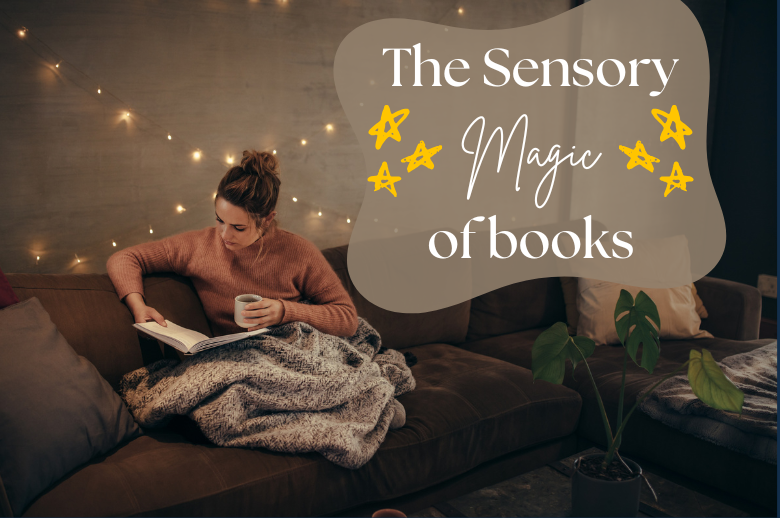
I can still remember middle school me, riding my bike to the local library in the summertime. Often accompanied by my best friend (hiiiii Becky), we’d park outside and walk into the vestibule, the air conditioning immediately cooling our sweaty skin as the new building smell welcomed us in.
Our public library was brand-spanking-new, and I can still remember exactly how it smelled. I’d walk through the vestibule and through the sliding library door into the bright, welcoming library with the kids books in shorter bookcases in front. I’d make a beeline for the Dear America series and other books in the middle-school-ish section, just browsing for new stories and feeling in heaven amongst the stacks.
With books, the possibilities for what to read about were endless, and my undiagnosed AuDHD brain was just so happy there, surrounded by them.
I have loved books for as long as I can remember. As a neurodivergent person, books are my safe place. Whether I’m physically alone or not, it’s a solitary activity I can sink into. I can meet characters who are very like me, very unlike me, or somewhere in the middle. I can get a glimpse into their minds, see how they work, and attempt to understand the world from their perspective for just a little while.
And when I finally figured out I was neurodivergent in my mid 30s, it’s books I turned to to learn and explore what that meant and how I could support myself.
Beyond just enjoying the content, the sensory experiences of reading have always had the power to ground me.
Books, notebooks, and paper in general have always been a sensory favorite for my neurodivergent brain. In middle school, I relished handing papers still warm from the copy machine down the row of students. The smell of fresh ink on warm paper was intoxicating, as was the sound of my rubber pencil eraser tap-tap-tapping on the paper on my desk and the scratch of lead as everyone wrote their names on their handout.
But books were by far the best. As a child, I started rumpling the pages as I read, holding a corner down and then pushing a wave of pages back and forth, back and forth. Books with thinner pages are the best for this; thicker pages don’t rumple as well. It’s the feel of the paper as it waves, the sound of pages shape-shifting back and forth, and the smell the book releases that make page rumpling oh-so-satisfying.
I would also worry the corners of my books, thumbing over them and fanning them out and back, out and back. All of my childhood books had very dirty corners as a result.
As an adult, I don’t do as much corner fanning, just because I worry about making dirty corners. I still do it, but limit myself to keep from sullying the book. I do still do a version of the waving, though — if the book is a paperback, the entire opened back or front can wave, all of the pages working together to make a very satisfying sound.
And the smell! There’s old book smell, new book smell, library smell, bookstore smell, friend’s house smell…book smells are different and you never know what you’re going to get until you open it up and give it a sniff.
On my Kindle, I tap my fingernails on the plastic, feel the smoothness of the plastic, run my fingers around the dimples where my dog tried to eat it, or rub my thumb over the soft apple sticker in the corner.
I’ve always craved this sensory input from reading. It’s not just the story I disappear into, but the entire feeling of reading. To me it is comfort, safety, respite, and sensory bliss.
I think it’s the Autistic side of me that loves all the sensory input. The ADHD side tries to butt in all the time in different ways—I’m constantly holding my fingers in the pages where the next chapter starts because my brain is trying to rush me through. “Just get to the next part,” it says, as I try to quiet it so I can relax and enjoy the story.
If you’re neurodivergent (or you just love the sensory experience of reading), please comment below and share your experiences with me! I’d love to hear them.
And now, since this is a book blog, here are a few books either about neurodivergence or with neurodivergent characters that I’ve really enjoyed recently.
Neurodivergent-Affirming Book Recommendations
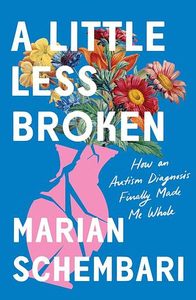
A Little Less Broken: How an Autism Diagnosis Finally Made Me Whole by Marian Schembari
I listened to this one and really enjoyed her story of just figuring out herself and her brain.
It took Marian decades to finally get an autism diagnosis. As a child, she was just labelled as sensitive, moody, and introverted. It’s not until she’s an adult that she finally learns about the signs of autism and realizes it sounds exactly like herself. I loved listening to her describe how much the diagnosis helped her understand herself and her life, and I wished I could hug that little girl who didn’t understand why the way she experienced the world was so much different from her peers.
Bookshop.org | Amazon | Goodreads | StoryGraph | PangoBooks

Order from Chaos: The Everyday Grind of Staying Organized with Adult ADHD by Jaclyn Paul
Order from Chaos is actually the first book I read about ADHD after I was diagnosed, so it holds a bit of a special place in my heart. I had found Jaclyn Paul on social media and enjoyed her content, so I immediately picked up her book.
I enjoyed most parts of the book and found her tips and insights very useful. There were a few sections I didn’t really feel like I needed, but you can take or leave whichever bits you want. For more about this one, read my full review of Order from Chaos.
Bookshop.org | Amazon | Goodreads | StoryGraph | PangoBooks
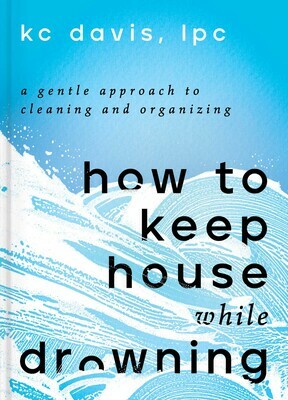
How to Keep House While Drowning: A Gentle Approach to Cleaning and Organizing by KC Davis
If you struggle to keep up with household chores for any reason, this book is for you. It’s like a comforting hug from a good friend, reminding you that you’re doing your best and your best is enough.
It also provides tips on just making the bare minimum workable when you’re overwhelmed or unable to get much done. I highly recommend reading it for the comfort factor and the reminders that the cleanliness of your home isn’t a morally reprehensible thing, and it has nothing to do with your worth as a human.
Bookshop.org | Amazon | Goodreads | StoryGraph | PangoBooks
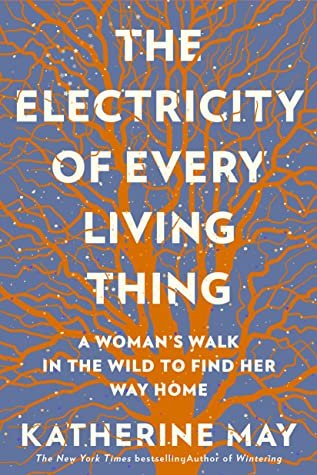
The Electricity of Every Living Thing by Katherine May
I read this memoir in 2022 before I was diagnosed with ADHD and long before I figured out my own autism status (highly suspected but not officially diagnosed), and I honestly think I would feel differently about it now. At the time, I really liked it but didn’t totally connect with some of her musings while she walked. I think that would be different now.
For what it’s worth, my review back in 2022 is in this list of what we read in May of 2022.
Bookshop.org | Amazon | Goodreads | StoryGraph | PangoBooks
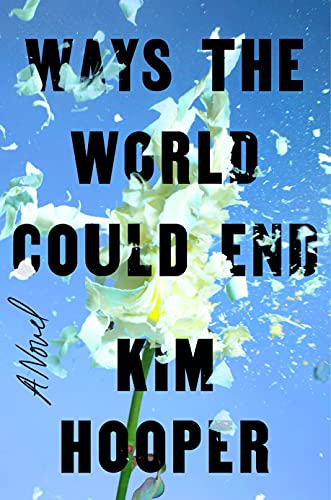
Ways the World Could End by Kim Hooper
One of my favorite novels featuring a neurodivergent-coded character, Ways the World Could End is about a doomsday-prepping dad with autism (Asperger’s) raising a daughter on his own.
I found the whole story just gorgeously done and loved the relationship this dad and daughter share. If you want to hear more of my thoughts, check out my full review of Ways the World Could End.
Bookshop.org | Amazon | Goodreads | StoryGraph | PangoBooks
Those are a few neurodivergent-ish books I’ve read that I’ve loved. If you have more recs, please let me know!

More About Me
- What We Read in September 2026 - October 13, 2026
- Reading While Neurodivergent: The Sensory Magic of Books - October 2, 2026
- What We Read in August 2026 - September 9, 2026