The following is a guest post by author Roie Oknin. Make sure to meet him at the bottom of the post!
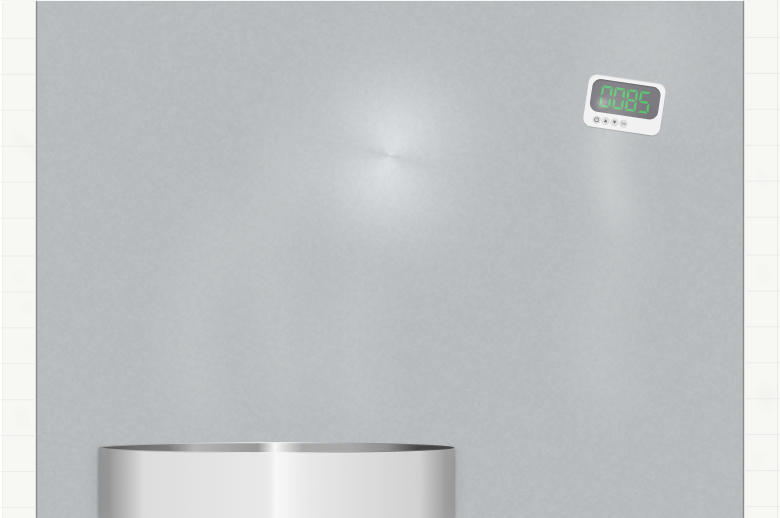
In my novel Ramen, Existential Crises, the noodles cook for exactly 85 seconds.
Not approximately 85 seconds. Not until they look ready. Exactly 85.
The rule belongs to Fujihara-san, the owner of the tiny ramen shop where the book takes place. He has been making the same bowl of ramen for decades. There is one dish on the menu, the broth has been kept over the same flame for 32 years, and there is a correct way to do almost everything. Any other way is profoundly wrong.
When I started writing the book, the 85-second timer was just another part of the restaurant. It felt like the sort of rule Fujihara-san would have. I did not put it there because I wanted it to symbolise anything. It was just a timer.
But as I kept writing, I realised how much that tiny rule was already telling me about a character. That made me think more broadly about how useful routines can be in fiction.
Small rules can tell us a lot about a character
There are plenty of direct ways to describe someone.
A writer can tell us that a character is punctual, anxious, controlling, messy, sentimental or meticulous. Sometimes that is exactly what a sentence needs to do.
But there is another way:
- How do they make their coffee?
- Do they set three alarms every morning?
- Do they arrive ten minutes early?
- Do they take the same route home even though another one is faster?
- Do they wash a cup immediately after using it, or leave it in the sink until there are no clean cups left?
None of these things has to mean anything when it first appears. A habit can simply be a habit. But repeat it, place it beside other habits, or let another character react to it, and suddenly it begins to tell us something.
The person who arrives ten minutes early does not need to announce that they hate being late. The action is already doing some of that work.
Showing rather than telling does not have to be dramatic
“Show, don’t tell” is probably one of the most repeated pieces of writing advice, and I think it can sometimes make us imagine that showing requires a large, carefully constructed scene. It often doesn’t.
Sometimes showing is just repetition. If a character makes tea in exactly the same order every morning, readers will notice. If they straighten every object on their desk before beginning work, readers will notice that too.
Now, if they suddenly don’t do it, readers will probably notice even more. The useful thing about a routine is that it can accumulate meaning very quietly.
Routines exist between people too
We usually talk about routine as something individual.
My morning routine. My commute. My way of making coffee.
But some of the most interesting routines belong to more than one person. People who spend enough time together develop choreography. One person reaches for the plates while the other gets the cutlery. Someone always drives. Someone else always chooses the music. A colleague starts making the second coffee without asking. Two friends sit in the same places every time they meet.
Nobody necessarily sat down and negotiated any of this. It just happened often enough to become the way things are done.
I find that incredibly useful when writing relationships because it gives a sense that the characters existed before the page we are currently reading.
They have history. They know what the other person is about to do. Sometimes they know it so well that they stop noticing.
A shared routine can show intimacy without anyone saying that two people are close. It can show distance too.
And the smallest alteration can say a lot:
If someone always pours two cups of coffee and one morning pours only one, the reader is going to wonder why.
Routine is both comforting and dangerous
I like routine.
I don’t think repetition is automatically dull, either in life or in fiction.
There is something pleasant about knowing what happens next. Familiar actions reduce the number of decisions we have to make. They make places feel like ours. They can make relationships feel secure.
But that is also what makes them interesting. A routine can be comforting because it removes uncertainty. It can also make it very easy not to ask whether you still want what you have.
The same action can therefore tell two completely different stories:
1) Someone eating breakfast in the same café every Sunday might be content.
2) Someone eating breakfast in the same café every Sunday might be terrified of trying somewhere else.
The action itself does not answer the question. Context does.
And I think that ambiguity is much more interesting than assigning a fixed meaning to every repeated behaviour.
As a writer, I don’t necessarily want to decide that a character’s habit ‘represents’ something and then make sure the reader understands the symbolism. I would rather let the character keep doing it. Eventually, the reader will form their own understanding of why.
Breaking a routine can be surprisingly powerful
Once a pattern has been established, very little is required to disturb it.
Imagine that, for fifty pages, a character calls their mother every Sunday evening. Then one Sunday, they don’t. Nothing has happened yet. There is no dramatic confrontation. We don’t even know why the call didn’t happen.
But the absence has weight because the routine came first. This is one of the reasons I think small repeated details can be so useful structurally.
A writer does not always need to make an event bigger. Sometimes you can make the world around it more consistent.
Then a tiny change feels enormous.
Please let me demonstrate. Look at the difference between these similar sentences:
1) This morning too, Tom had his coffee.
2) This morning, Tom had his coffee.
3) This morning, Tom Eventually had his coffee.
Think about what each one means.
Ordinary things are rarely only ordinary
I find myself drawn to mundane details when I write.
Work. Food. Objects.
Part of the appeal, I think, is that ordinary life gives characters fewer places to hide.
If someone is running home when it starts raining heavily, it does not tell us very much about them.
Give them an ordinary Tuesday afternoon and things become more interesting.
- What do they do when nothing exceptional is happening?
- Where do they go automatically?
- Who do they call?
- What do they avoid?
Those details may never become important in a conventional plot sense. They do not have to. Sometimes their job is to make a person feel like they have a life beyond the scene in front of us.
And sometimes, without the writer planning it, one of those tiny details starts carrying much more weight than expected.
That is what happened to me with an 85-second kitchen timer. I put it into a ramen shop. Then I kept writing. Sometimes the noodles simply need to cook for 85 seconds. And sometimes that is enough to begin discovering who the people waiting for them really are.
Meet the Author

Roie Oknin is a writer, artist and medical student. He holds a BSc in Neuroscience and a BA in Psychology, and also works in ophthalmology research. Ramen, Existential Crises is his debut novel. Alongside writing, he works across a range of artistic mediums, including painting, sculpture and photography. He is also a devoted coffee drinker.
You can find Roie and learn more about Ramen, Existential Crises at https://roieoknin.com.

More About Me
- What We Read in September 2026 - October 13, 2026
- Reading While Neurodivergent: The Sensory Magic of Books - October 2, 2026
- What We Read in August 2026 - September 9, 2026