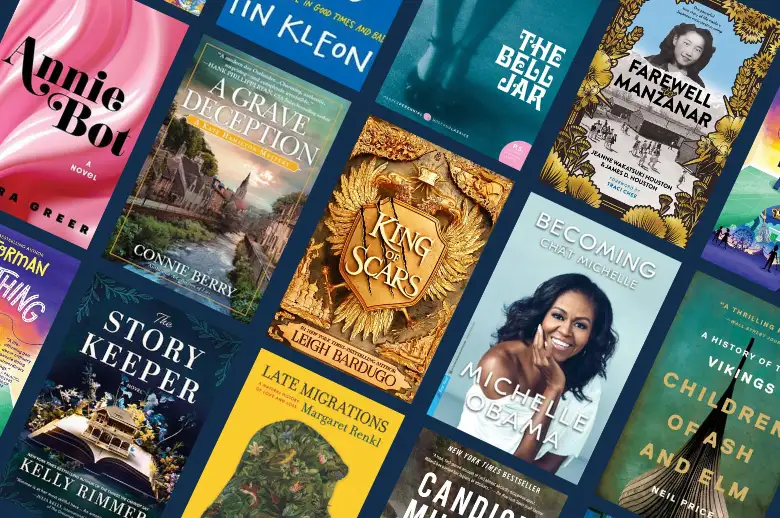
March was kind of a weird month here in Minnesota. It got bitterly cold again a few times, and for some reason it just flew by for me! I still managed to read some good books, though, of course 🙂
Here’s what we read in March:
Cathy
Children of Ash and Elm: A History of the Vikings by Neil Price

Children of Ash and Elm is a non-fiction book that tells the story of the Vikings through their politics, cosmology, art, and culture. I picked this up because I was looking for something non-fiction and historical about a part of history that I don’t really know much about. Suprisingly, while listening to it, I’ve realised that I know more than I thought – mainly because I’ve visited a lot of the sites and places in Sweden and Denmark mentioned in the book. I’m listening to the audiobook and am generally enjoying it.
The narrative is a little bit overdramatic at times – I imagine it’s the author trying to get a bit of an “epic saga” vibe (which “Vikings” are known for) into the book. While a bit OTT, the narrative doesn’t distract from the facts in the book so I don’t mind it too much.
Children of Ash and Elm is good as an audiobook and if you’re looking to learn the basics about the Vikings, I’d recommend listening to it. I’d give it 3 stars.
Bookshop.org | Amazon | Goodreads | StoryGraph
King of Scars by Leigh Bardugo
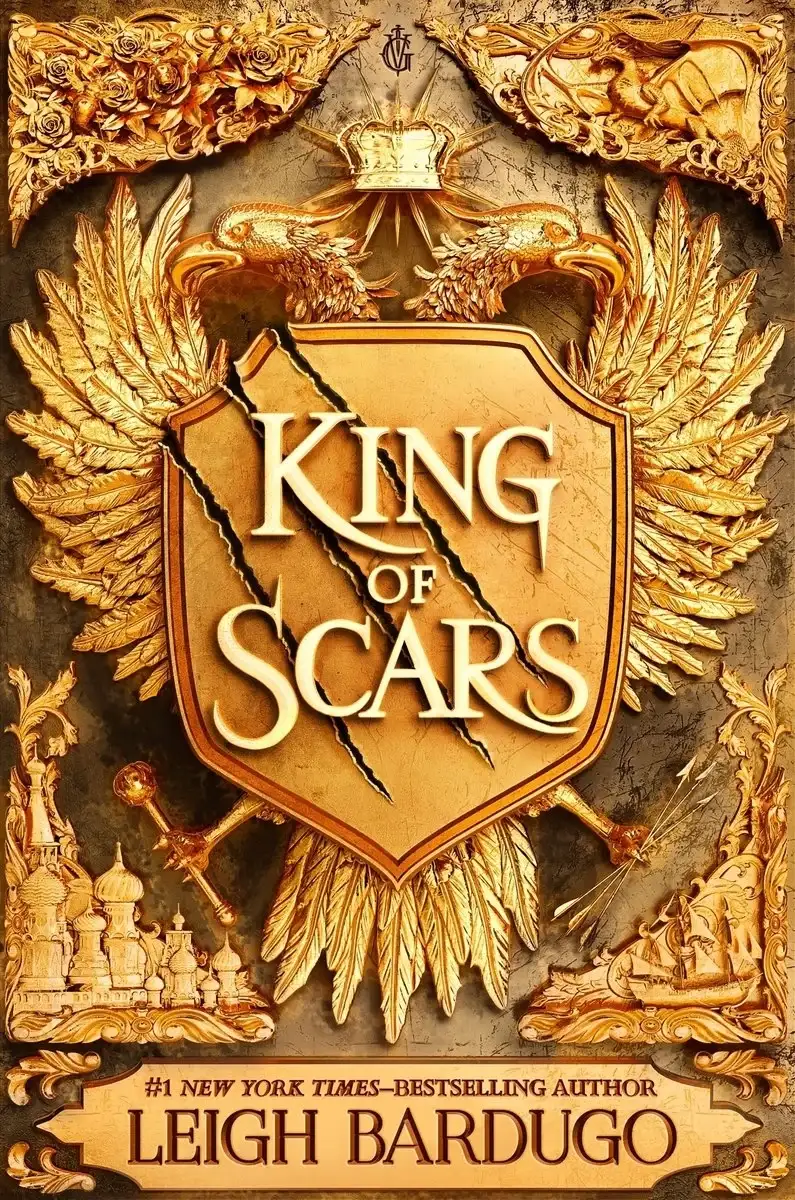
I read Leigh Bardugo’s Six of Crows duology last year and loved them so have continued with King of Scars. This duology follows Nikolai Lantsov, the newly crowned King, and his team of Grisha as they rebuild after the civil war and he battles with a darkness growing inside him.
I love love love Leigh Bardugo’s writing in this series (and in Six of Crows), it’s entertaining, clever and has a certain emotional depth that endears the characters to you. The witty banter between Nikolai and Zoya is fun and they add a lightness in between Nina’s heartbreaking chapters.
I’m a massive fan of the whole Grisha universe (although I can take or leave the original Shadow and Bone trilogy) so this was 5 stars for me.
Bookshop.org | Amazon | Goodreads | StoryGraph
Joli
The Story Keeper by Kelly Rimmer
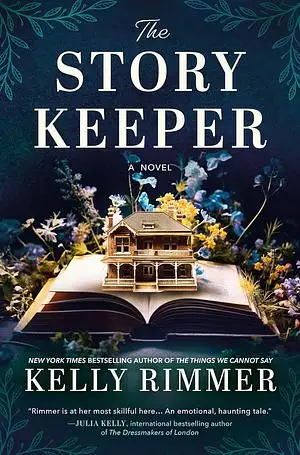
This book doesn’t come out until July, so I’ll keep this brief. Just think a decaying, sprawling estate that’s maybe haunted, family secrets, a very familiar-feeling, mysterious book, and a woman navigating her new, divorced life.
Bookshop.org | Amazon | Goodreads | StoryGraph
Keep Going: 10 Ways to Stay Creative in Good Times and Bad by Austin Kleon

This was my first Austin Kleon book. I’m not sure how he flew under the radar for me for so long! I’ve definitely heard about Steal Like an Artist, but haven’t read it.
Keep Going has so many little nuggets about life and creativity in it that I really enjoyed. I’ll leave you with this one:
You have to pay attention to the rhythms and cycles of your creative output and learn to be patient in the off-seasons. You have to give yourself time to change and observe your own patterns.
“Live in each season as it passes,” wrote Henry David Thoreau, “and resign yourself to the influences of each.”
Bookshop.org | Amazon | Goodreads | StoryGraph
A Grave Deception by Connie Berry
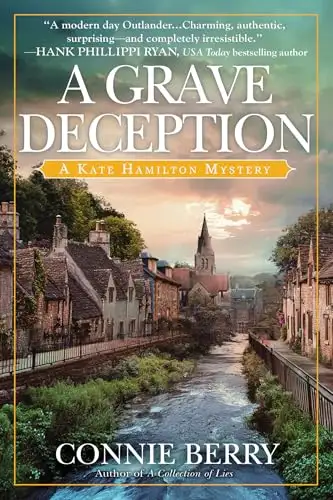
This was such a fun historical mystery! It somehow connects a mystery from the 17th century to a murder in the present, which I thought was unique and entertaining. I actually wrote a full review of this one, so I’ll let you read that if you want to learn more!
Read my full review of A Grave Deception.
Bookshop.org | Amazon | Goodreads | StoryGraph
Becoming by Michelle Obama (Audiobook)

Oh Michelle, how I miss the days of you and your family being in the White House! This book was fascinating. I listened to Michelle read it herself which was just…I don’t know, comforting for some reason? Just her steadiness and mom-ness was soothing while was listening <3.
I loved hearing about her childhood and her family. I knew she grew up in Chicago but really had no idea what her circumstances were. It really was fascinating to hear about her home and school life, her time dating Barack, her support of him during his upward trajectory, and how she went about raising her kids in the most public of stages.
Just give this one a listen, even if you’ve already read it. You’ll love hearing her tell her stories. All the stars!
Bookshop.org | Amazon | Goodreads | StoryGraph
Late Migrations: A Natural History of Love and Loss by Margaret Renkl
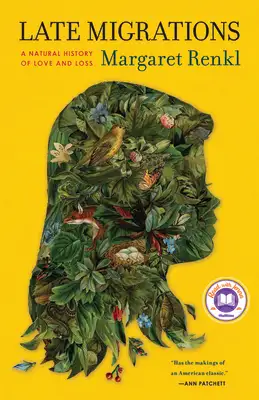
I’ve heard this book was gorgeous but loved finding that out for myself! Late Migrations is largely poetic prose, very nature-themed, largely about love and loss, and just beautiful. Renkl’s musings on life and what it all means are definitely worth the read. The essays are pretty short, so it’s a quick read. But you don’t want to blast through them too quickly! Have a good sit and think <3
Bookshop.org | Amazon | Goodreads | StoryGraph
Annie Bot by Sierra Greer
March is sci-fi month at my book club, and this year the pick was Annie Bot. It’s not my favorite genre, but I went into it with an open mind.
Annie Bot is basically about a very lifelike woman robot created to be a “real live” sex toy and live-in cleaner for a man. Yeah…yikes.
But for the first half or so, I was liking it! I did get a bit bored, though, after that. There was a fair amount of action at first that had to back off a bit in order to set up the ending, and I just wasn’t super interested. I just wanted to know how it would end.
I (and my book club) also had a lot of questions about how the…inner workings of the robot woman’s body.
Bookshop.org | Amazon | Goodreads | StoryGraph
Molly
River of the Gods by Candice Millard

This was my audiobook for the month, which I chose because I want to get back into reading more nonfiction, and because I heard very positive things about it on TikTok.
River of the Gods tells the story of two explorers, Richard Burton and John Speke, and their search for the source of the Nile River in the late 1800s. One-time partners turned rivals, the differing scientific and sociological approaches of the two men and their disagreements about their expeditions into Central Africa provided much drama for the Royal Geographical Society.
In the review I saw, I was promised riveting tale with myriad twists and turns. While River of the Gods did not quite live up to the enthralling narrative I was expecting, it was solidly written with excellent character development and consistent pacing. The ending certainly did take me off guard, although there was less shock and awe throughout than I had hoped.
Bookshop.org | Amazon | Goodreads | StoryGraph
Renee

The Bell Jar by Sylvia Plath
A critic once called The Bell Jar “the first feminine novel written in a Salinger mood.” This was a quick re-read for me. I’ve read it numerous times and seem to feel most compelled to pick it up again when it feels like the world hates women a little extra and I want to crawl out of my skin.
Fiction in the loosest sense, it’s essentially the story of Sylvia Plath’s nervous breakdown. Esther Greenwood is Plath’s fictional stand-in. All of the characters in the book are basically real people in Sylvia’s life, but she just changed the names. It was so true to life, in fact, that her mother wrote to the publisher and asked them not to publish it in the US because it could hurt too many people who were in the book.
Bookshop.org | Amazon | Goodreads | StoryGraph

Franny and Zooey by J.D. Salinger
I’ve re-read Franny & Zooey a handful of times. There are a lot of things you can take away from the novel, which focuses on the youngest two of the seven Glass children: Franny and Zooey. The Glasses feature heavily in Salinger’s universe, from oldest child, Seymour, to youngest child, Franny.
What really stood out to me this time and at this point in my life was how all of the children were gifted, and what that pressure did to them. They were all so smart and precocious, all appearing on the radio show “It’s a Wise Child.” Their participation in this radio show that publicly demonstrated their brilliance was, perhaps, the highlight of their parents’ lives. Their home is a kind of time capsule of memories of those days, with awards, commendations, and radios all over their house.
But as the children grew up, each of them struggles in a different way to live up to that potential. The book looks at how Franny and Zooey each process that, especially in the context of living in their older siblings’ shadows.
I don’t love it as much as I did when I first read it in high school, but I still enjoyed it. I’ve just been in the mood for moody mid-century American lit, I guess.
Bookshop.org | Amazon | Goodreads | StoryGraph
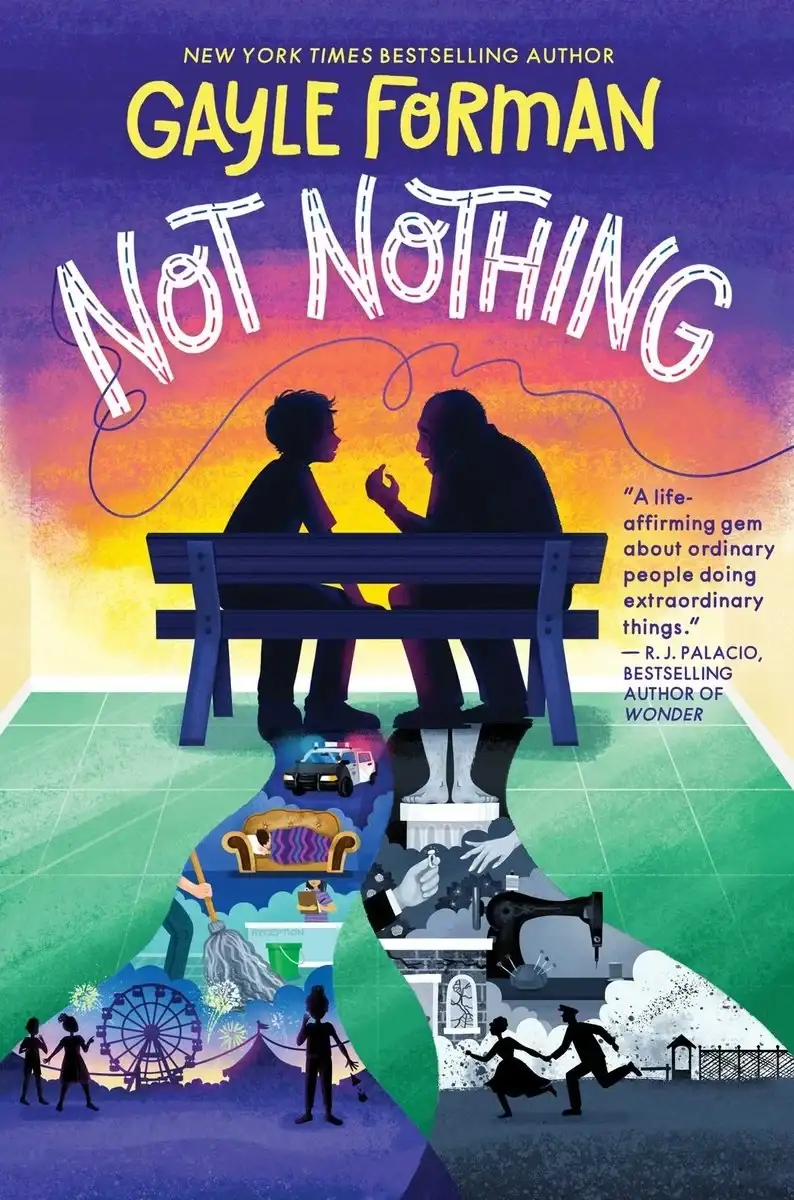
Not Nothing by Gayle Forman (Audiobook)
Not Nothing by Gayle Forman is a middle grade book about a 12-year-old boy, Alex, who has to spend his summer volunteering in a nursing home as punishment. At least, that’s what it is on the surface.
Alex hasn’t had an easy life. He never knew his dad. His mom didn’t like to stay in one place, so they always moved around. But then his mom got sick and suffered what’s assumed to be some kind of mental breakdown. He’s placed in foster care and eventually goes to live with his aunt and uncle. He knows they don’t really want him.
He gets into trouble and gets expelled from school, and that’s how he ends up at the nursing home, making friends with another volunteer: gifted, bossy Maya-Jade. There is also a 107-year-old Holocaust survivor, Josey, who hasn’t spoken in years, but sees something in Alex and decides to tell Alex his story.
This book, although written for middle grade, is pretty emotional because it deals with the foster system, children feeling unwanted, the Holocaust, nursing homes, dementia patients, etc. But I really enjoyed it and its message that it’s never too late to make things right and turn it back around.
Bookshop.org | Amazon | Goodreads | StoryGraph

Farewell to Manzanar by Jeanne Wakatsuki Houston
Farewell to Manzanar is Jeanne Wakatsuki Houston’s memoir about her childhood years in the Japanese internment camp. I first read this in college, and felt the need to read it again since history tends to repeat itself.
The first time I read this book, I was appalled at internment camps in the US, especially rounding up citizens and putting them there based on their ethnicity. Whatever I had learned about this in my American history class in high school had not focused nearly enough on this dark spot in our history.
It’s impossible to read it now without thinking of the ICE detention centers. What happened in the Japanese internment camps was awful. The government eventually apologized and made reparations to the survivors in the late 1980s. And while their situation was far from ideal, it’s difficult to not notice the stark contrast between the internment camps with their sense of community and the detention centers and how they treat detainees in such an inhumane way.
Wakatsuki Houston’s book illuminated the question of what effects—psychological, emotional, physical—the camps had on residents, including how that impacted their assimilation back into society after 1945. We know how that affected those who were detained in the camps. We know how bad it was. And here we are, 80 years later. We’re doing it again, and even worse.
That makes this book difficult to read. It was something Wakatsuki Houston likely never anticipated when she wrote the book. I wonder if she saw the signs that it was happening again by the time she died in 2024.
Despite the frustrating parallels, this is an important book. Those who don’t remember the past are doomed to repeat it, and this is something we must remember and learn from.
Bookshop.org | Amazon | Goodreads | StoryGraph
That’s it! That’s what we’ve been reading. What did you read in March?

More About Me
- What We Read in March 2026 - April 10, 2026
- Review: A Grave Deception by Connie Berry - April 4, 2026
- 12 Best Books to Stash in Your Analog Bag - March 29, 2026